Redd's Remnant #2

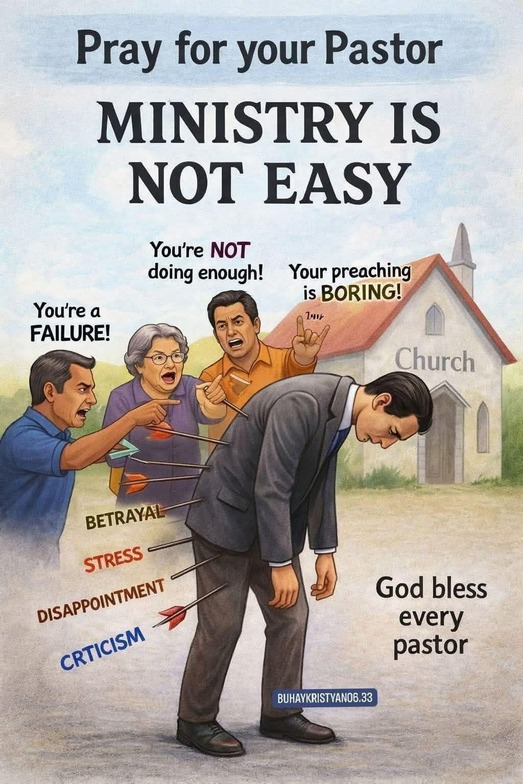
Before a sermon is preached, before a prayer is offered, before a visit is made, most pastors carry something unseen into every moment of ministry. It is not always visible to the congregation, but it is deeply felt in the heart. It is the quiet accumulation of expectations, criticisms, comparisons, and internal questions that whisper, “Am I enough?” Many pastors begin their week not just preparing messages, but processing emotions—some spoken to them directly, others sensed in silence.
Some words linger longer than they should.
“You’re not doing enough.”
“Your preaching is boring.”
“The church isn’t growing.”
“Someone else could do this better.”
Even when untrue, these words can land like daggers—sharp, unexpected, and deeply wounding. Over time, they do not just pierce; they embed themselves. And what makes it even harder is that pastors often feel they must keep going while still bleeding.
My friends, ministry is sacred, but it is also human work! And being human means feeling the weight of disappointment, betrayal, stress, and even isolation.
So how does a pastor begin to remove those daggers?
First, by acknowledging they are there.
The apostle Paul reminds us in 2 Corinthians 4:8–9, “We are afflicted in every way, but not crushed; perplexed, but not driven to despair; persecuted, but not forsaken; struck down, but not destroyed.”
The daggers may have landed, but they do not get the final word.
Healing begins when pastors bring those wounds back to God—not as polished prayers, but as honest cries. Psalm 34:18 assures us, “The Lord is close to the brokenhearted and saves those who are crushed in spirit.” God is not distant from the pain of ministry; God is present in it.
It is also in remembering your calling that the daggers begin to loosen. You were not called by people’s approval, and you are not sustained by their applause. Galatians 1:10 asks, “Am I now seeking human approval, or God’s approval?” Your assignment was given by God, and God has not changed His mind about you.
And when the weight feels unbearable, Jesus offers an invitation, not a demand: “Come to me, all you that are weary and are carrying heavy burdens, and I will give you rest” (Matthew 11:28). Rest is not weakness; it is obedience. It is trust that God is still working even when you are not.
Finally, pastors must learn to replace the voices that wound with the voice that heals. Isaiah 41:10 declares, “Do not fear, for I am with you… I will strengthen you, I will help you, I will uphold you with my righteous right hand.” What God speaks over you is greater than anything spoken against you.
So take a moment—breathe, release, and begin to pull those daggers out, one by one, gently, not by your strength alone, but by the steady, healing hand of God.
You are not a failure.
You are not forgotten.
You are not alone.
You are called.
You are equipped.
You are sustained by grace.
And the same God who called you is the God who will carry you through criticism, through weariness, through doubt—and into renewed joy.
Because your story does not end in pain.
It continues in purpose, strengthened by grace, and anchored in a hope that cannot be shaken.
“Let us not grow weary in doing what is right, for we will reap at harvest time, if we do not give up” (Galatians 6:9).
Hold on, Pastor.
The harvest is still coming.
~Rev. Redd~